ServicesPhysical Damage
Physical Damage Insurance in Grand Prairie
When a tractor rolls, a trailer is stolen or hail dents a parked box truck, physical damage coverage is what repairs or replaces your own unit. We set the stated value from photos, the VIN and your bill of sale, so the number on the policy fits the truck you run.
What physical damage coverage protects
Your liability policy pays for the other driver's vehicle and injuries. It pays nothing toward your own tractor, trailer or box truck. Physical damage insurance fills that gap with two parts: collision, for impacts with another vehicle or object, and comprehensive, for losses like theft, fire, vandalism, falling objects, flood and hail.
No federal filing requires it, but your lender or lessor almost always does. If your truck is financed, the loan agreement will name a minimum coverage level and list the lender as loss payee. If you own the truck outright, the question is simpler: could your operation absorb the cost of replacing that unit out of pocket.
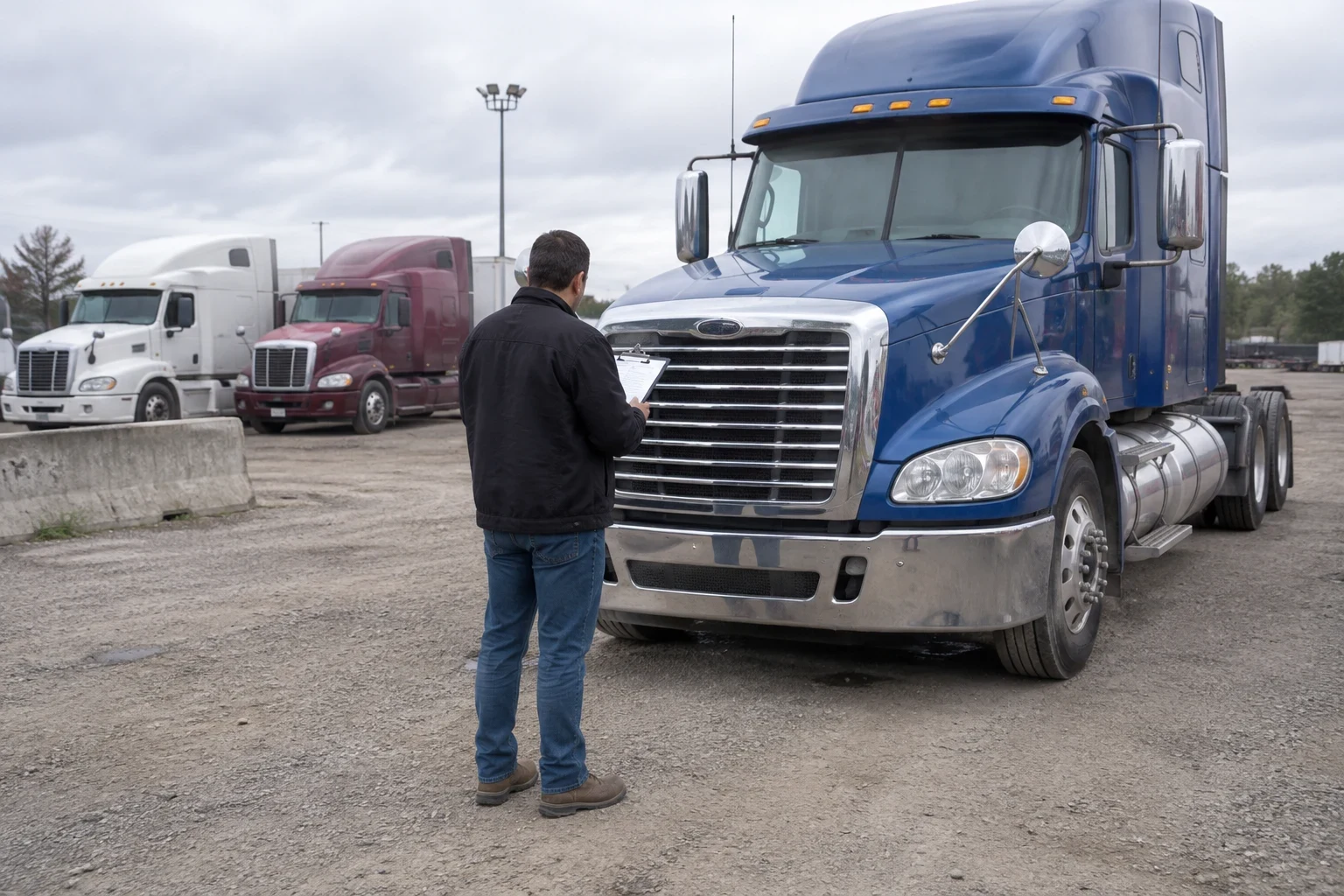
We work from the truck, not a guess. Before we quote, we ask for clear pictures of the unit and its equipment, then show you in writing what we found and how we arrived at the value.
What we set up on your policy
Collision coverage
Pays for damage from rollovers, jackknifes, backing into a dock post or striking another vehicle, regardless of fault. You pay the deductible, and the policy covers the rest up to the stated value.
Comprehensive coverage
Covers non-collision losses: theft of the tractor, a fire that starts in the wiring harness, a cracked windshield from road debris, or hail on a parked unit. North Texas spring storms make the hail portion worth reading closely.
Stated value set from documents
Most truck policies are written on a stated amount, but many pay the lesser of that amount or actual cash value. We match the stated value to your bill of sale, recent appraisal and condition records, so you are not paying premium on value the carrier would never pay out.
Permanently attached equipment
APUs, aftermarket sleepers, headache racks, dump bodies and liftgates can be missed if they are not listed. We record each one by make, serial number and condition so it is part of the covered unit.
Loss payee and lessor paperwork
We add your lender or leasing company correctly and issue the certificate of insurance they ask for, with the right VIN on it.
Optional add-ons
Depending on the carrier, towing and storage, rental reimbursement or downtime coverage may be available. We explain what each pays and when it is worth the extra premium.
Signs your physical damage coverage needs a look
- Your stated value is years old
- Used truck prices move. If the policy still lists what you paid three years ago, you may be overpaying, or short on coverage if you have rebuilt the engine since.
- You added equipment
- A new APU, a dump body or a liftgate that was never reported may not be paid for as part of the truck after a loss.
- Your lender sent a notice
- A force-placed policy from a lender usually costs more and protects only the lender. That letter means your proof of coverage is missing or wrong.
- You pull a trailer you don't own
- Your trailer physical damage does not cover someone else's trailer. That gap belongs to Trailer Interchange Insurance, and we check for it.
- Your deductible no longer fits
- A deductible chosen to cut premium can hurt if you could not cover it after a wreck. We look at whether it matches your cash on hand.
How we build your quote
- 1
A call about the unit
We ask for year, make, model, VIN, mileage, how the truck is financed and what it hauls. Radius and garaging location matter too.
- 2
Photos and documents
You send photos of all four sides, the VIN plate, the odometer and any added equipment, plus your bill of sale or appraisal. These stay in your file and show the truck's condition before any claim.
- 3
Written findings
We send a short summary of what we found, including the value we recommend, the deductible options and anything missing from your current policy, tied back to the records you sent.
- 4
Quote and binding
We go over the carrier quotes by phone or video, you pick the coverage, and we issue certificates to your lender or lessor once it is bound.
What moves the premium
Physical damage premium is mostly a percentage of the value on the policy, adjusted for risk. The same truck can price very differently depending on how and where it runs. These are the main drivers we look at.
- Stated value
- A higher stated value means a higher premium. Setting it accurately from documents keeps you from paying for value you cannot collect.
- Deductible
- Raising the deductible lowers premium, but you carry more of each loss. We show you the trade at a few levels.
- Driver record and experience
- Accidents, violations and years behind the wheel weigh heavily on collision pricing.
- Equipment type and use
- Carriers price a truck working loose, uneven construction ground differently from one making short city deliveries, and a long-run flatbed setup differently again. Rough terrain, highway miles and tight docks each shift the collision risk.
- Garaging and theft exposure
- Where the truck sits overnight and whether it has GPS tracking or other anti-theft measures affect the comprehensive portion.
Physical damage questions we hear
- Is physical damage required by the FMCSA?
- No. Federal filings cover liability, not damage to your own truck. Physical damage is required by lenders and lessors, and by your own need to replace the unit after a loss.
- What is the difference between stated value and actual cash value?
- Stated value is the amount listed on your policy. Actual cash value is what the truck was worth right before the loss, after depreciation. Many policies pay the lesser of the two, which is why we set the stated value from real documents.
- Does hail damage count as collision or comprehensive?
- Hail falls under comprehensive. If your truck sits outside, check that comprehensive is on the policy and that the deductible is one you can handle after a spring storm.
- Why do you want photos of my truck?
- Photos record the condition and equipment before anything happens. If you file a claim, they help show what the truck looked like and what was attached, which supports the value on your policy.
- Does this cover the trailer I'm pulling?
- It covers trailers you own if they are listed on the policy. A trailer owned by someone else needs trailer interchange or non-owned trailer coverage, which we can quote alongside.
Know what your truck is covered for
Send us the pictures and paperwork, and we will show you what we found and what we recommend. We work with motor carriers in Grand Prairie, Arlington, Irving and the surrounding area by phone and video.