ServicesFleet Truck Insurance
Fleet Truck Insurance in Grand Prairie
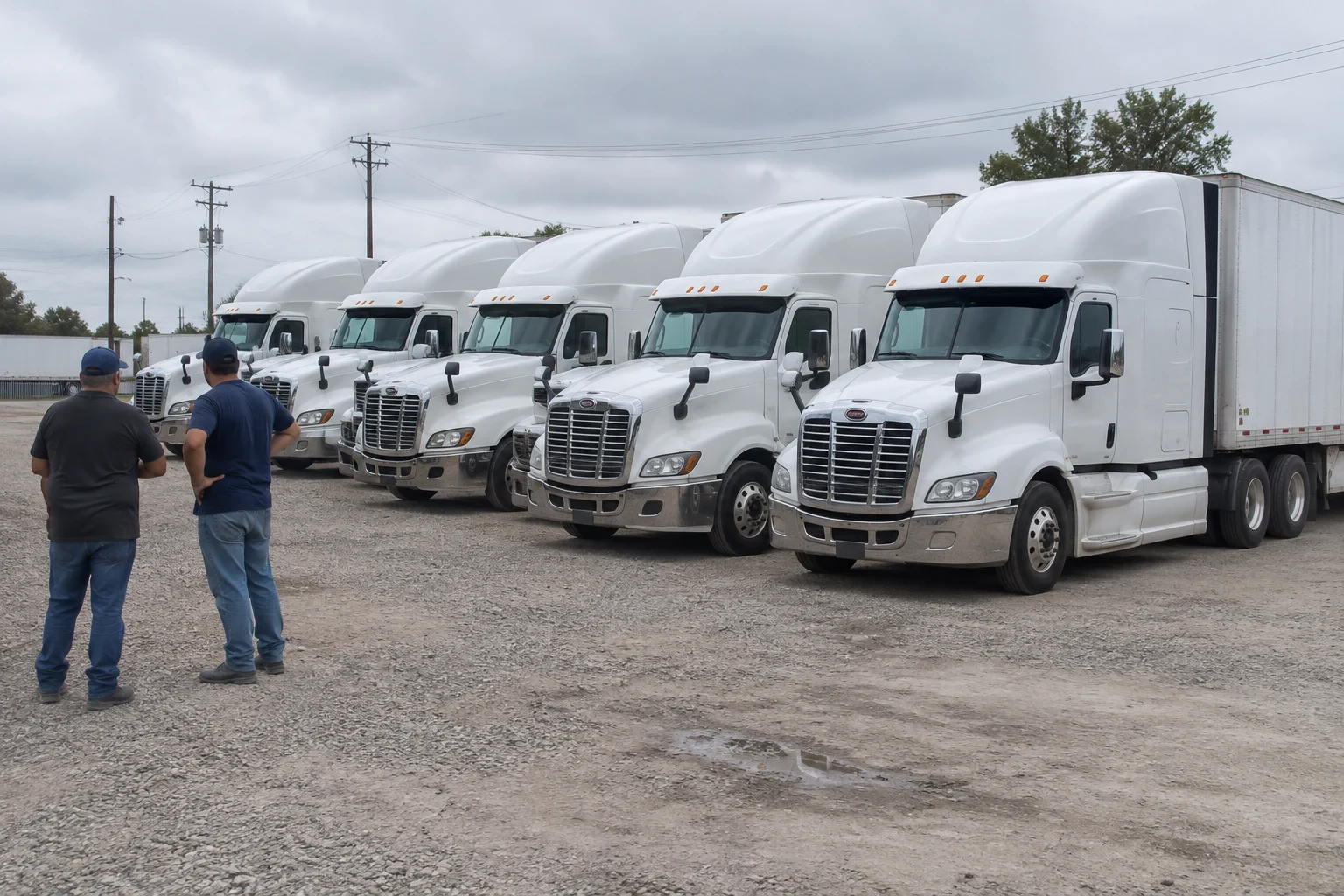
We write fleet coverage for motor carriers running several power units. Before we quote, we check your vehicle schedule, driver list and filings against what your trucks actually do. Then we send you marked-up copies showing every mismatch we found and how we fixed it.
What fleet coverage does for a growing operation
Fleet truck insurance puts your power units, trailers and drivers under one policy structure, usually with auto liability, physical damage and cargo coverage written together. For a motor carrier with several trucks, that means one renewal date, one certificate of insurance format and one set of filings tied to your DOT number and MC authority.
Fleets rarely lose money on the big items. They lose it in the details. A tractor sold last spring is still on the vehicle schedule. A driver who quit in March is still listed. A stated value never came down as the truck aged. We go through the schedule line by line, mark up every entry that does not match your operation, and send you that record so you can see what we found and what we changed.
Most fleets we work with run out of Grand Prairie and the surrounding area, and many add units quickly. The policy has to keep up without a new application every time.
What we review and set up
Vehicle and trailer schedule
We match each VIN, year, make and garaging location to your titles and registrations. Units you no longer run come off, and new ones go on with the right class and radius.
Driver list and MVR check
Carriers rate a fleet on its drivers. We pull motor vehicle records, note experience and violations, and flag any driver who could push the whole fleet into a higher tier.
Liability limits and filings
We confirm your auto liability limit meets federal requirements for the freight you haul and what your shippers and brokers ask for. We also check that the BMC-91X and MCS-90 endorsement are on file with FMCSA under the correct DOT number.
Physical damage stated values
Stated values set the most a carrier pays on a total loss. We compare each value to the truck's current market so you are not overpaying premium on a value you could never collect.
Cargo coverage matched to freight
We read the cargo form for exclusions that hit your commodities, such as unattended vehicle, reefer breakdown or high-theft items. Then we set limits per truck to fit your loads.
Certificates of insurance
Brokers and shippers want certificates that list the right units and limits. We issue them from a clean schedule so they hold up when someone checks.
Signs your fleet has outgrown its current policy
Trucks on separate policies
If each truck was added on its own policy as you grew, you are tracking several renewal dates and paying several policy fees. Consolidating usually simplifies filings too.
An unexplained renewal increase
A jump with no claims behind it often traces to a driver MVR change, a radius reclassification or units still listed that you sold. We find which one.
Rejected certificates
When a broker sends back your certificate because a unit or limit is missing, the schedule and the policy have drifted apart.
High driver turnover
Frequent hires mean frequent driver additions. Without a clear process, someone ends up behind the wheel before the carrier has approved them, and that can leave a claim exposed.
Deductibles that no longer fit
A deductible chosen when you had two trucks may be wrong for eight. Higher deductibles can lower premium once cash flow can absorb them.
How a fleet review runs
- 1
Gather your documents
On the phone or by video, we collect your declarations pages, vehicle schedule, driver list and five years of loss runs. If you do not have loss runs, we explain how to request them from your current carrier.
- 2
Document what we find
We mark up your current schedule and policy forms, noting outdated units, missing drivers, wrong values and cargo exclusions. You get those annotated copies before any quote, so you see the reasoning behind each change.
- 3
Quote and compare
We take the corrected schedule to market and lay the quotes side by side by limit, deductible, exclusion and premium. We tell you plainly where a cheaper quote gives up coverage.
- 4
Bind, file and certify
Once you choose, we bind coverage, confirm the federal filings post under your DOT number, and issue certificates to the brokers and shippers on your list. You get screenshots of the posted filings for your records.
What moves the premium on a fleet policy
Fleet pricing is built unit by unit and driver by driver, then adjusted for your loss history. We cannot give a number until we see the schedule and loss runs. Here is what carriers weigh most heavily.
- Units and equipment type
- Tractors, straight trucks, dump bodies and pickups with flatbeds each rate differently. Trailer count and type matter too.
- Radius and lanes
- Local work under a set radius rates differently than long-haul interstate runs. Carriers also look at the states you cross and how often.
- Driver records and experience
- Years of commercial driving, MVR violations and age all count. One driver with recent major violations can move the rate for the whole fleet.
- Loss history
- Claim frequency often matters more than claim size. Several small liability claims can cost more at renewal than one large physical damage loss.
- Commodity and limits
- Higher liability limits and cargo classes like electronics or refrigerated freight raise premium. Deductible choices bring it back down.
Fleet truck insurance questions
Something not covered here? (972) 236-7691
At what number of trucks does my operation get rated as a fleet?
There is no single cutoff. Some carriers move you to fleet rating at two or three power units, and others wait until you run more. When you call, we tell you where your unit count lands with the carriers we plan to approach.
We just bought another tractor. How does it get onto our policy before the renewal date?
Send us the VIN, the stated value you want and the name of the driver assigned to it. We submit an endorsement request to the carrier, and the premium for that unit is prorated over the months left on the term. Once the carrier confirms the unit, we send fresh certificates to your brokers and shippers.
Do all of my drivers need carrier approval before they haul?
On most fleet policies, yes. Each driver is submitted and approved first, and a driver who was never sent in can give the carrier a reason to contest a claim. We build a short checklist with you so every new hire is reviewed before the first dispatch.
One of our drivers has violations on his MVR. What are the options?
The carrier might add a surcharge, exclude that driver by name, or decline to write the fleet at all. We lay out the record and each option next to the others, with the premium shown both with and without that driver. You make the call.
Are the owner-operators leased to us covered under our fleet policy?
While they run under your dispatch, your auto liability generally extends to them. Off dispatch, they need their own non-trucking liability (bobtail) coverage, and most also need physical damage on their trucks. We read your lease agreements and mark where the gaps sit.

Get a clear look at your fleet coverage
Have your current declarations page and vehicle schedule handy. We will go through them with you and show you exactly what we would change and why.