ServicesCommercial Trucking Insurance
Commercial Trucking Insurance in Grand Prairie
We put together the core coverage a motor carrier needs to run legally and get loads: primary liability, physical damage, cargo and the filings tied to your DOT number. You see every line of the quote and what each one covers before you sign anything.
What a commercial trucking policy actually covers
Commercial trucking insurance is not one policy. It is a set of coverages that answer different questions: who pays when your truck hurts someone, who pays to fix or replace the truck, and who pays when the freight is lost or damaged. Primary auto liability is the piece regulators care about. Physical damage and cargo coverage are usually what your lender, broker or shipper asks for.
The right mix depends on how your operation runs. A long-haul owner-operator under their own MC authority needs different pieces than a leased-on driver, a local dump truck outfit or a box truck running final-mile freight. We start with your units, radius and commodities, then build only what fits. If you want a narrower look at a single coverage, see our pages on Primary Auto Liability Insurance, Physical Damage Insurance and Motor Truck Cargo Insurance.
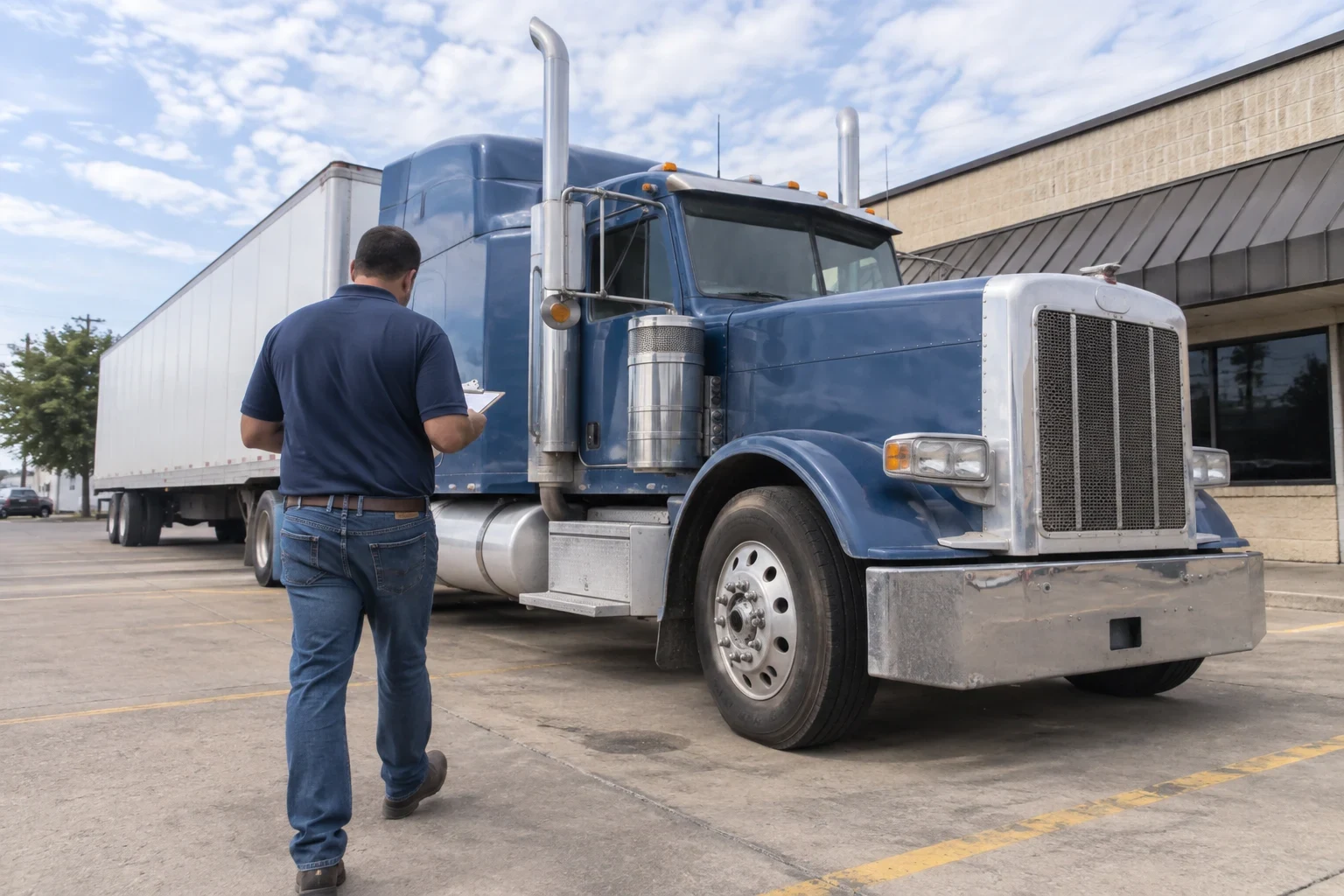
Our way of working is simple: we document what we find. If you already have a policy, we mark up your declarations page and show you where limits, exclusions or listed units do not match how you actually haul. When physical damage is quoted, we keep clear photos of each truck and trailer on file with the VIN and stated value, so there is no argument about condition later.
What we set up for your operation
- Primary auto liability
- Covers bodily injury and property damage you cause to others. Federal rules set a $750,000 minimum for most interstate general freight, but many brokers and shippers want $1,000,000, so we quote the limit your contracts require.
- Physical damage on your trucks and trailers
- Collision and comprehensive for the units you own or finance, written at a stated value. We record each unit with photos and the VIN so the schedule matches what is parked in your yard.
- Motor truck cargo
- Covers the freight you haul. We check the policy's commodity list and exclusions, such as unattended-vehicle or reefer breakdown clauses, against what you actually load.
- Filings and certificates
- We coordinate the BMC-91X federal filing, the MCS-90 endorsement and Form E for Texas intrastate authority with the carrier, then issue certificates of insurance to brokers and shippers when you ask.
- Add-on coverages when they apply
- Non-Trucking Liability (Bobtail) Insurance for leased-on drivers and Trailer Interchange Insurance for pulling trailers you do not own, added only if your setup calls for them.
Signs your current coverage needs a second look
A broker rejected your certificate
Usually the cargo limit is too low, the broker is not named on the certificate the way their contract requires, or the certificate lists a unit that is no longer on the policy. We find the exact line causing the rejection.
You are moving from leased-on to your own authority
Your carrier's liability stops covering you the day you run under your own MC authority. You need your own primary liability and filings in place before the authority goes active.
Your hauling changed
Switching from dry van to flatbed, adding hazmat, or moving from local to long haul can fall outside the radius or commodity limits you were rated on. A claim on unrated work can be denied.
You added or sold a truck
An unlisted unit may have no physical damage coverage at all. A sold unit left on the schedule means you keep paying premium for it.
Your renewal jumped without explanation
Premium moves for reasons you can trace: a loss run, a new violation on your CSA scores, a rate change by the carrier. We pull the pieces apart so you know which one it was.
How a quote works with us
- 1
A phone or video call about your operation
We ask for your DOT and MC numbers, the units you run, your driver list, radius and commodities. Most of this conversation happens by phone or video, or at our office if you prefer.
- 2
Review of what you have now
Send your current declarations page and loss runs. We mark up what we find, including gaps, duplicated coverage and units that do not match your schedule, and walk you through it.
- 3
Unit documentation
For physical damage, we collect photos of each truck and trailer showing the VIN plate, odometer and overall condition. These sit in your file and support the stated values on the policy.
- 4
Line-by-line quote
You get each coverage, limit and deductible broken out so you can see what drives the total. If a change would save premium, we say what you give up to get it.
- 5
Binding and filings
Once you choose, we bind coverage, confirm the filings reach FMCSA or the Texas DMV, and send certificates to the brokers you name.
What moves your premium
Trucking premiums are built from risk factors the carrier can measure. Two operations with the same truck can pay very different amounts. We cannot quote a number on this page, but we can explain what the underwriter is looking at.
- Driver records and experience
- Years of commercial driving, MVR violations and age of each driver weigh heavily. A new CDL holder often costs more to insure than the truck itself.
- Authority age and loss history
- A carrier with a new MC authority has no track record, so rates start higher. Clean loss runs over several years bring them down.
- Radius, commodity and equipment
- Long-haul miles, high-value or hazardous freight, and newer trucks with higher stated values all raise the cost. Local runs with general freight usually rate lower.
- Limits and deductibles
- Higher liability and cargo limits cost more. A larger physical damage deductible lowers premium but raises what you pay out of pocket after a wreck.
Commercial trucking insurance questions
Something not covered here? (972) 236-7691
What coverage do I legally need to run interstate?
For most general freight, federal rules require at least $750,000 in primary auto liability, filed with FMCSA on a BMC-91X. Hazmat and passenger carriers have higher minimums. Physical damage and cargo are not federally required, but lenders and brokers usually insist on them.
I only haul inside Texas. Is it different?
Yes. Intrastate carriers register with the Texas DMV, and the insurer files a Form E to show your liability is in force. The required limits depend on vehicle weight and what you haul, so we confirm them against your operation.
How fast can my filings be done after I buy?
The carrier submits the filing electronically once the policy is bound. It typically shows on the FMCSA system within a few business days, though timing is set by the carrier and the agency, not us. We check that it posted and tell you when it does.
Why do you want photos of my trucks?
Physical damage is written on a stated value. Dated photos of the VIN, odometer and condition support that value if you ever file a claim, and they keep the schedule accurate when units are added or sold.
Can you add a broker as a certificate holder?
Yes. Give us the broker's name and any wording they require, and we issue a certificate of insurance showing the limits they asked for. If your policy does not meet their requirement, we tell you which coverage falls short.
Get a quote you can read line by line
Have your DOT number, unit list and current declarations page handy. We will walk through your operation and show you what we find, piece by piece.