ServicesDump & Construction Trucks
Dump Truck and Construction Truck Insurance in Grand Prairie
Dump trucks and construction trucks carry risks a van trailer never sees: raised beds, soft ground, loose aggregate and contracts that demand specific certificates. We build coverage around your actual units and the work they do, and we show you, unit by unit, what we found and what we placed.
What this coverage is and when you need it
Construction trucking sits between two worlds. On the highway your trucks need auto liability and physical damage like any motor carrier. On the job site they dump, spread, pour and back up over unfinished ground, where a different set of claims shows up. A policy written for over-the-road freight often leaves gaps here, such as a hoist excluded from physical damage or a contract certificate the carrier will not issue.
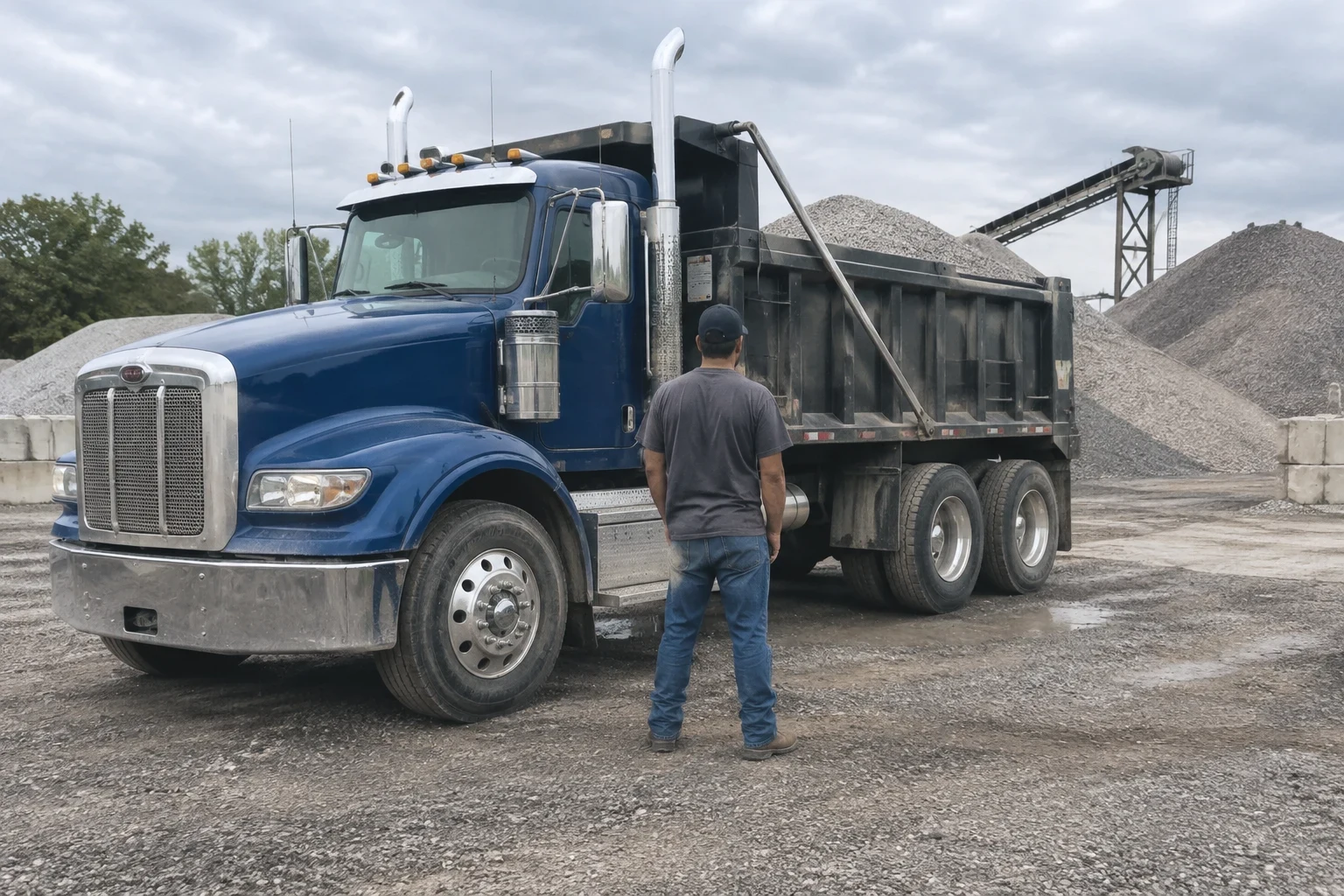
We start by documenting your operation. That means photos of each truck, its VIN plate, the body type and any add-on equipment like a hydraulic hoist, tarp system or pup trailer. That record is what we work from, so the schedule on your policy matches the iron in your yard and nothing gets valued as a bare chassis.
If you are an owner-operator with one tandem dump or a contractor running a small fleet of mixers and water trucks from Grand Prairie out to Mansfield and Cedar Hill, the same rule applies. The coverage should describe the work you actually do.
What we review and set up
Auto liability for loaded hauls
Primary liability sized for your trucks, your radius and any limits your general contractors require. Heavy aggregate loads raise stopping distance and rollover risk, so carriers look closely at this line.
Physical damage with the body valued
We list the dump body, hoist and attachments as part of the stated value. A chassis worth one amount and a body worth another should both be on paper, or a total loss pays short.
Job-site general liability
Claims from spilled material, damaged curbs or a struck utility line on site often fall outside auto coverage. We check whether your general liability picks those up.
Certificates of insurance for contracts
Many construction contracts require you to name the general contractor on your liability policy, along with waiver of subrogation or primary and noncontributory wording. We confirm the policy supports that language before you sign, not after.
Filings and authority
If you haul across state lines or for hire under a DOT number and MC authority, we handle the required filings so your registration stays active.
Signs your current policy may not fit the work
- Your hoist or body is not listed
- If the declarations page shows only the year, make and VIN, the body may not be covered at its real value. Ask us to compare it against the truck itself on a quick video walkaround.
- A contractor rejected your certificate
- This usually means the policy lacks the endorsement that names the contractor or waives subrogation. The fix is an endorsement, not always a new policy.
- Your radius changed
- Moving from local quarry runs to hauls past Arlington and Irving can push you into a different rating class. An outdated radius can complicate a claim.
- You added a different truck type
- A water truck, roll-off or mixer rates differently from an end dump. Adding one without telling the carrier can leave it uncovered.
- Cracked glass claims keep piling up
- Gravel and rock chips are constant in this work. If your deductible structure makes every windshield an out-of-pocket cost, it may be worth restructuring.
How we put your coverage together
- 1
Phone or video review
We talk through your trucks, drivers, haul types and contracts. You can meet us at our office or stay on the job site and do it by video.
- 2
Photo documentation of each unit
You send photos of each truck, its VIN plate and its equipment, or we walk through them on video. We tag each image to its line on the schedule.
- 3
Policy review with findings
If you already carry coverage, we go through the declarations and endorsements and show you what we found, including gaps, duplicates and outdated values.
- 4
Quotes and placement
We shop the risk, explain the differences between options in plain terms, and bind the coverage you choose. You get a summary that ties each unit's documentation to the coverage placed on it.
What moves the premium on construction trucks
Dump and construction truck coverage is priced on risk the carrier can see on paper. Clean documentation helps underwriters rate your trucks accurately instead of assuming the worst.
- Truck and body type
- End dumps, side dumps, belly dumps, transfers and mixers each carry different rollover and loss histories. Stated values for the body and hoist also add to physical damage cost.
- Haul radius and material
- Short local runs between a pit and a site rate differently from long hauls. Material matters too, since heavier and looser loads raise the risk of spills and tip-overs.
- Driver records and experience
- Carriers look at motor vehicle records, years driving heavy equipment and any recent claims. One driver with a poor record can change the price for the whole operation.
- Contract requirements
- Higher liability limits, umbrella requirements and specific endorsements requested by general contractors all add to the premium.
Questions dump and construction truck operators ask
- Do I need cargo coverage for hauling dirt and gravel?
- Often not, because fill, sand and aggregate rarely carry enough value to justify it. If you also haul equipment or higher-value materials, motor truck cargo insurance becomes worth a look. We will tell you honestly which applies to your loads.
- Is tipping over while dumping covered?
- An upset while the bed is raised is usually a physical damage claim, covered under collision if you carry it. The details depend on the policy wording, which is why we review it with you line by line.
- I only run in Texas. Do I still need filings?
- Intrastate carriers in Texas still have state registration and insurance filing requirements for heavier vehicles. If you also hold MC authority for interstate work, federal filings apply too. We sort out which ones your operation needs.
- Can I add a truck in the middle of a project?
- Yes. Send us photos of the new unit and its VIN plate along with the body details, and we will request the change with the carrier. The truck should be added before it goes to work.
- Why do you want pictures of my trucks?
- They show the body, hoist and equipment that a VIN alone does not. They let us value each unit correctly and give you a clear record of what was covered if you ever file a claim.
Get coverage that matches your trucks
Tell us what you run and where it works. We will review your setup, document each unit and walk you through the options.